

Sunnyside Yard
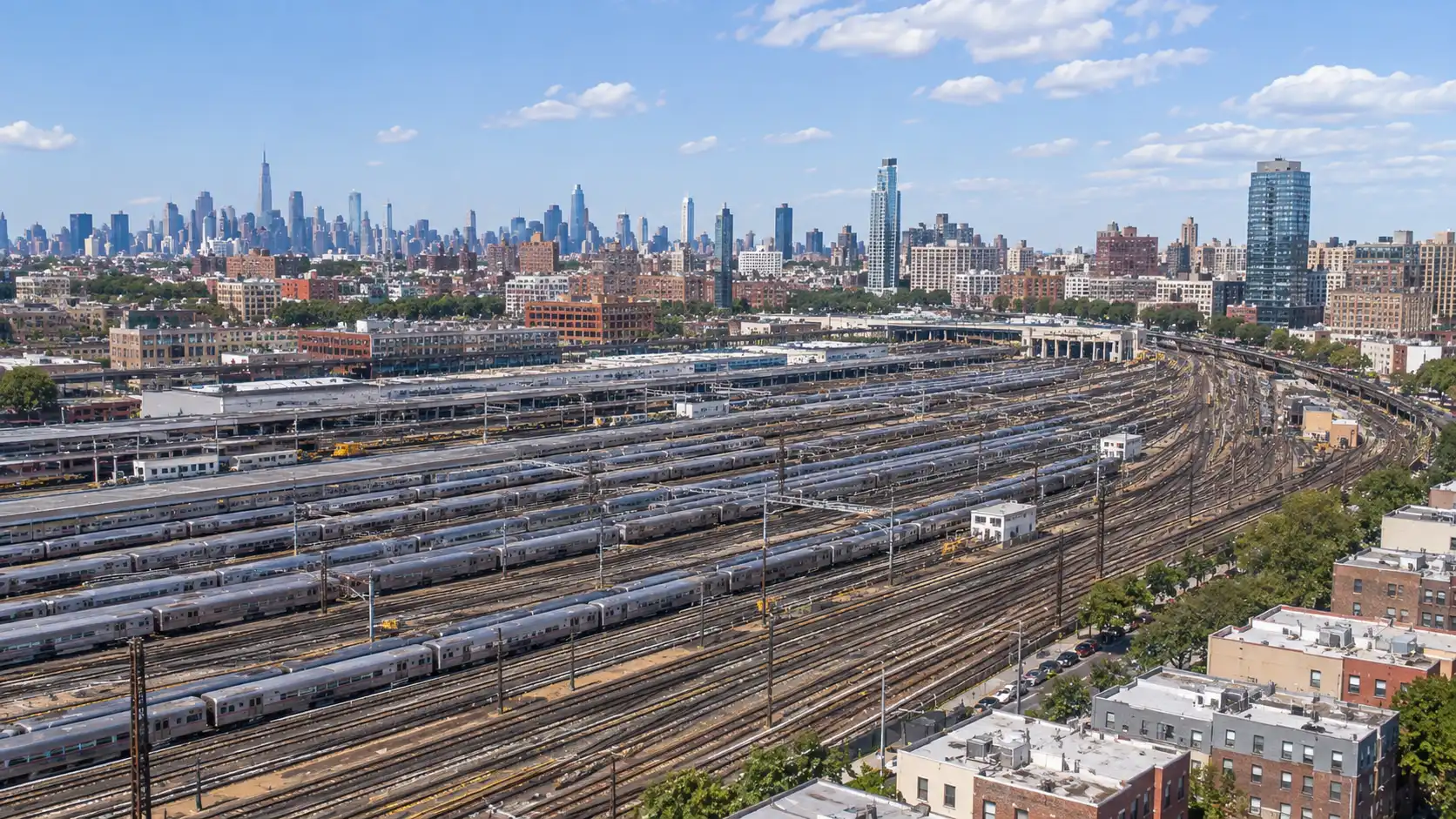
Sunnyside Yard: The $21 Billion Vision That Could Transform Queens
Few proposed developments in New York City have the potential to reshape an entire section of a borough quite like Sunnyside Yard. Located in Queens, this approximately 180-acre active railroad complex has become the focus of an ambitious redevelopment proposal that could introduce 12,000 affordable homes, 60 acres of public open space, schools, and new community facilities.
In 2026, renewed discussions between Mayor Zohran Mamdani and federal officials brought the project back into the spotlight, including a proposed $21 billion federal investment to construct a platform above the existing rail yard.
Although the development remains far from construction, its potential implications extend well beyond the project site. For homeowners, prospective buyers, and investors, Sunnyside Yard represents an important part of the conversation about the future of Queens real estate.
What Is Sunnyside Yard?
Opened to rail traffic in November 1910 by the Pennsylvania Railroad, Sunnyside Yard is one of the region’s most important passenger railroad facilities. It serves Amtrak, the Long Island Rail Road (LIRR), and New Jersey Transit, providing storage, maintenance, and staging for trains traveling throughout the Northeast.
The facility connects to Manhattan’s Penn Station through the East River Tunnels, making it an essential component of the regional transportation network.
One particularly important feature is Harold Interlocking, a major railroad junction at the eastern end of the yard where Northeast Corridor and LIRR routes converge.
| Key fact | Details |
|---|---|
| Established | 1910 |
| Location | Queens, New York City |
| Approximate site size | 180 acres |
| Primary function | Passenger rail storage and maintenance |
| Railroad operators | Amtrak, LIRR, NJ Transit |
| Major connection | Penn Station and the Northeast Corridor |
The facility’s active operations are also what make redevelopment so challenging. Unlike conventional development sites, construction must accommodate an operating railroad throughout the process.
For nearby homeowners, the yard already represents an established piece of transportation infrastructure. Any future improvements should be considered additional potential benefits rather than guaranteed changes to current accessibility.
The Sunnyside Yard Master Plan: A New Neighborhood Above the Tracks
Released by the New York City Economic Development Corporation (NYCEDC) on March 3, 2020, the Sunnyside Yard Master Plan introduced a 70-year vision for transforming the railroad complex into a mixed-use neighborhood.
The central concept involves constructing a structural platform above portions of the active tracks, effectively creating new land for residential development, public spaces, and community facilities.
The original plan outlines several ambitious objectives:
| Proposed feature | Planning target |
|---|---|
| Affordable housing | 12,000 homes |
| Public open space | 60 acres |
| Permanent employment | 7,000+ jobs |
| Construction employment | 30,000+ jobs |
| Childcare and healthcare facilities | 30+ |
| Development horizon | Approximately 70 years |
The proposed platform would also introduce a new street grid intended to reconnect neighborhoods currently separated by the railroad infrastructure, including Sunnyside, Woodside, Astoria, and Long Island City.
The vision goes beyond residential construction. It includes schools, healthcare facilities, pedestrian-friendly streets, greenways, and improved public transportation connections.
Importantly, these figures represent long-term planning objectives, not approved construction commitments. The final development program will depend on engineering, funding, regulatory approvals, and community input.
For prospective buyers, additional housing could eventually create more residential choices throughout Queens. However, established neighborhood amenities and existing transportation access remain more reliable factors when evaluating a property today.
The $21 Billion Federal Proposal: What’s Happening in 2026?
Sunnyside Yard gained renewed national attention on February 26, 2026, when Mayor Zohran Mamdani met with President Donald Trump to discuss federal support for the project.
According to the Mayor’s Office announcement, the city proposed securing more than $21 billion in federal grants to construct the platform.
The proposal includes 12,000 affordable homes, including 6,000 Mitchell-Lama-style homes, as well as parks, schools, healthcare facilities, and approximately 30,000 union construction jobs.
The discussions continued on September 21, 2026, when the mayor and president agreed to advance technical and legal discussions concerning authorization for the platform.
However, the September meeting did not establish a federal funding commitment, final approvals, or a construction timeline.
| Development milestone | Status |
|---|---|
| Master plan | Released in March 2020 |
| Federal funding proposal | More than $21 billion requested |
| February 2026 meeting | Federal investment discussed |
| September 2026 discussions | Further technical and legal work advanced |
| Final funding approval | Not secured |
| Construction schedule | Not established |
The engineering challenge is substantial. Building over an active railroad requires complex structural foundations, coordination among transportation agencies, and careful planning to avoid disrupting existing train operations.
The requested federal funding also primarily concerns the deck and associated infrastructure, rather than representing the total cost of constructing and completing the entire neighborhood.
For real estate buyers, the distinction is important: the project’s potential impact should be viewed as a long-term possibility, not an immediate reason to pay a premium for a nearby property.
Rail Modernization: Investment Already Underway
While the residential redevelopment remains uncertain, railroad modernization is moving forward.
On August 28, 2026, Amtrak announced the groundbreaking of a new maintenance facility at Sunnyside Yard. According to Amtrak’s project announcement, the combined investment in the maintenance facility, crew base, and platform improvements exceeds $1 billion.
The improvements include:
- A new two-track maintenance and inspection facility.
- Six new service and cleaning tracks.
- Repairs and upgrades to 11 existing service platforms.
- Improvements to railroad connections and interlockings.
- Facilities designed to support Amtrak’s next-generation Airo trains.
The project is expected to open in phases through 2030.
A separate long-term transportation concept involves a potential Sunnyside commuter station serving LIRR passengers and possibly Metro-North riders. Although a station appears in the broader planning vision, it should not be confused with an approved station currently under construction.
These railroad investments are significant because they improve an existing transportation facility independently of the proposed residential development.
Which Queens Neighborhoods Could Benefit?
The potential redevelopment of Sunnyside Yard could influence several surrounding residential markets. However, the impact will depend on proximity, transportation access, the final development footprint, and the amenities ultimately delivered.
| Neighborhood | Potential real estate implications |
|---|---|
| Sunnyside | Closest relationship to the proposed development and potential new public amenities |
| Woodside | Established subway and LIRR access, with connections to Queens |
| Astoria | Established residential demand, restaurants, shopping, and transportation |
| Long Island City | Existing residential development, commercial activity, and employment centers |
| Jackson Heights | Established housing market and extensive subway and bus connections |
Potential benefits include improved public spaces, additional employment opportunities, greater neighborhood connectivity, and increased housing options.
However, additional density could also create challenges involving traffic, public services, construction disruption, and competition for existing infrastructure.
The introduction of 12,000 homes could eventually influence the broader housing market by increasing supply. At the same time, improved amenities and employment opportunities could strengthen demand for certain locations.
Neither outcome guarantees property appreciation.
One consideration buyers should not overlook is construction exposure. A property close to a proposed development site could experience years of noise and disruption before receiving any benefit from the completed project.
What Should Buyers and Investors Consider?
Sunnyside Yard creates an interesting long-term development story, but purchasing property requires evaluating more than future neighborhood potential.
Several factors deserve particular attention:
| Buying consideration | What to investigate |
|---|---|
| Transportation | Existing subway, bus, and LIRR accessibility |
| Building condition | Maintenance history and upcoming capital improvements |
| Co-op financials | Reserve funds, assessments, and underlying mortgages |
| Monthly expenses | Maintenance, taxes, utilities, and other costs |
| Development exposure | Proximity to proposed construction areas |
| Resale potential | Historical comparable sales and buyer demand |
| Rental potential | Existing rents, operating expenses, and realistic income |
| Neighborhood amenities | Current parks, restaurants, shopping, and schools |
For investors, multifamily properties may provide opportunities to participate in established rental markets while maintaining exposure to Queens’ long-term development.
For first-time buyers, Sunnyside and Woodside offer established residential neighborhoods with existing transportation and amenities. Astoria and Long Island City provide additional options across different property types and price points.
The strongest purchasing decisions are based on a property’s current value and financial fundamentals, with future development treated as potential additional upside.
The Future of Sunnyside Yard and Queens
Sunnyside Yard represents one of New York City’s most ambitious housing and infrastructure proposals. With a $21 billion federal funding request, 12,000 proposed affordable homes, 60 acres of planned public space, and more than $1 billion in separate railroad modernization investment, the site is central to the future development conversation in Queens.
Although the full residential redevelopment remains years, and potentially decades, away, the surrounding neighborhoods already offer established housing markets, transportation connections, and community amenities.
For buyers, sellers, and investors, understanding the difference between existing neighborhood advantages and proposed future improvements is essential.
The Bianca Colasuonno Team at Compass brings extensive Queens transaction experience, local market knowledge, and a proven record of sales performance to clients navigating the borough’s evolving real estate landscape.
Whether exploring a co-op in Sunnyside, a multifamily property in Woodside, or a condominium in Long Island City, the team’s experience helps clients evaluate opportunities based on current market conditions and long-term neighborhood potential.
As Queens continues to evolve, informed local guidance remains an important part of making a confident real estate decision.
Who Is The Bianca Colasuonno Team?
Understanding a neighborhood’s future requires more than following development announcements. It also requires knowledge of existing housing inventory, building requirements, neighborhood demand, and local sales activity.
Bianca Colasuonno is a Queens real estate professional and a Compass founding agent in Queens in 2018. The Bianca Colasuonno Team has developed a substantial presence throughout the borough, with more than $1 billion in cumulative closed sales volume and over 1,000 successful Queens transactions, according to its published Compass profile.
The team’s published achievements include:
| Recognition | Achievement |
|---|---|
| 2026 RealTrends | #1 team in Astoria |
| 2026 RealTrends | #2 team in Queens by volume |
| 2026 RealTrends | #20 medium team in New York State by sides |
| 2026 RealTrends | #53 medium team in New York State by volume |
| 2026 annual sales volume | $100.05 million |
| 2026 transaction sides | 124 |
| Compass recognition | #1 Compass team in Queens, 2018–2025 |
Additional distinctions include the most co-ops sold in Astoria in 2025 and the highest-selling single-family home in Astoria that year.
The team’s experience spans co-ops, condominiums, single-family homes, multifamily properties, and investment opportunities.
This local experience is particularly relevant when evaluating neighborhoods potentially influenced by major infrastructure investments. Understanding building financials, comparable sales, property conditions, and neighborhood characteristics can help buyers make informed decisions beyond the initial listing price.
More information about the team’s background and recognition is available through its Compass professional profile.