

Sunnyside Gardens
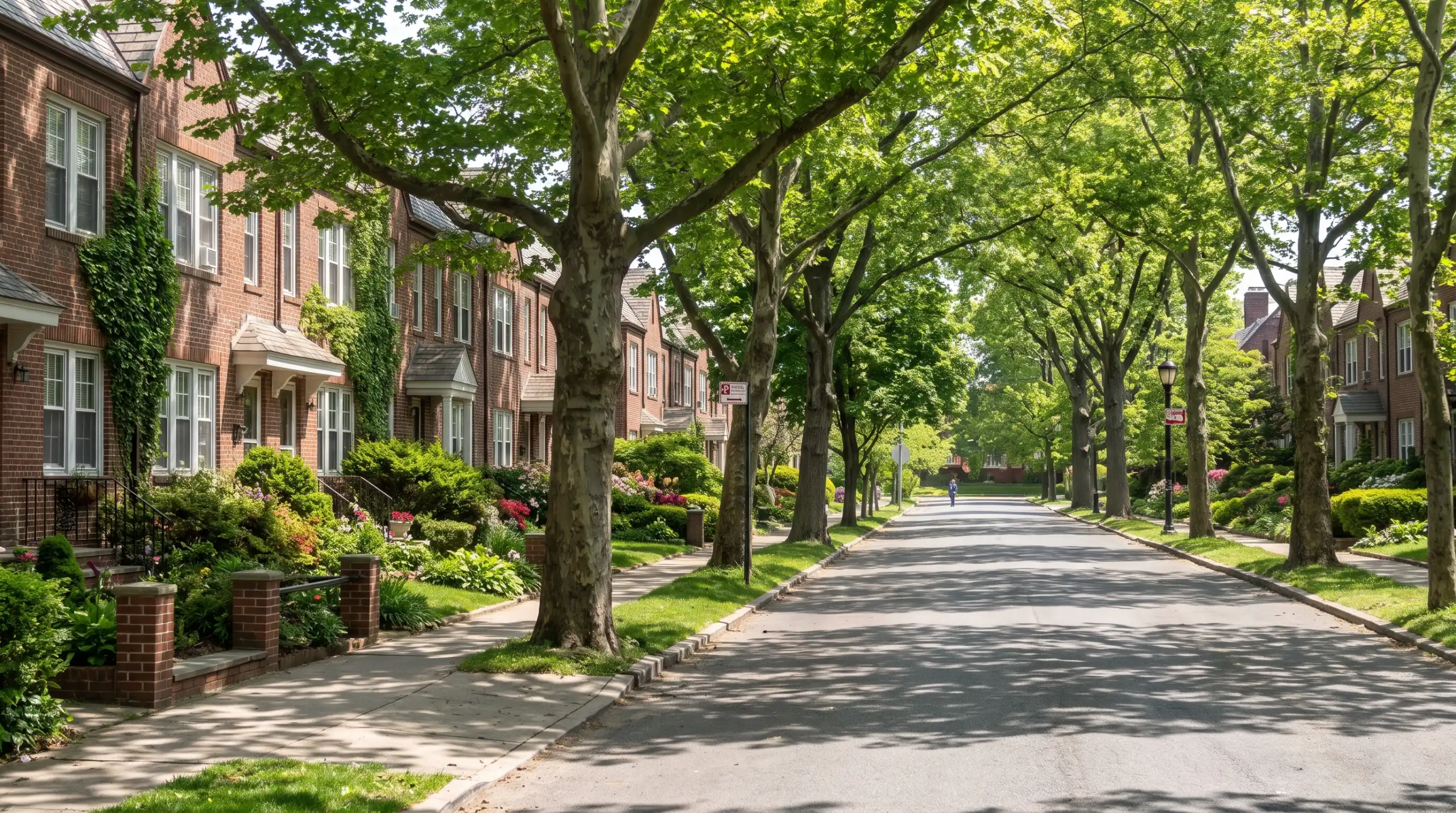
Sunnyside Gardens, Queens: The History Behind One of New York City’s Most Unique Neighborhoods
From an ambitious 1920s housing experiment to one of Queens’ most distinctive historic residential communities, Sunnyside Gardens offers a rare combination of architectural character, shared green space, and convenient city living.
There are few neighborhoods in New York City where history is quite as visible as it is in Sunnyside Gardens. Tucked within Sunnyside Queens, this remarkable residential enclave was designed around an idea that was revolutionary for its time: creating a community where people could enjoy the benefits of suburban living without sacrificing the convenience of the city.
Nearly a century later, its tree lined streets, brick row houses, landscaped courtyards, and distinctive architecture remain defining features. But what makes Sunnyside Gardens particularly interesting isn’t simply how it looks. It’s the planning philosophy, economic history, and preservation efforts that have allowed this community to retain its identity through generations of change.
For prospective buyers, understanding that history is also essential to understanding what makes owning property here different.
The Vision: Creating an American Garden City
Sunnyside Gardens was developed between 1924 and 1928 by the City Housing Corporation, founded by Alexander Bing, with the goal of bringing the principles of England’s Garden City movement to New York.
Inspired by urban planner Ebenezer Howard, the concept challenged the overcrowded tenement conditions common throughout the city. Rather than maximizing the number of buildings on available land, the developers prioritized natural light, open space, attractive housing, and a stronger sense of community.
The project brought together an influential group of architects and planners, including Clarence Stein, Henry Wright, Frederick Lee Ackerman, and landscape architect Marjorie Sewell Cautley. Their work produced a development spanning approximately 76.67 acres and incorporating roughly 1,200 housing units.
One of its most distinctive features was its use of landscaped interior courtyards. Buildings occupied only approximately 28% of their lots, leaving substantial space for shared greenery.
Importantly, Sunnyside Gardens was designed around Queens’ existing street grid rather than the larger superblocks originally associated with some Garden City proposals. Homes and apartment buildings were arranged along the perimeter of blocks, creating interconnected green spaces within.
| Original design feature | What it means today |
|---|---|
| Approximately 77 acres | A substantial, cohesive planned community |
| 28% lot coverage | More open space between buildings |
| Two- and three-story housing | A low rise residential atmosphere |
| Shared interior gardens | A distinctive communal landscape |
| Brick architecture | A recognizable historic streetscape |
| Approximately 1,200 homes | A mix of housing types and ownership arrangements |
The neighborhood also attracted influential residents, including urban critic Lewis Mumford, who recognized its importance as an experiment in human-centered city planning.
The Great Depression: A Community Tested
Sunnyside Gardens early success faced an unexpected challenge just a few years after construction.
The Great Depression placed enormous financial pressure on homeowners. Residents who had purchased homes during the economic optimism of the 1920s suddenly faced unemployment, declining incomes, and difficulty meeting mortgage obligations.
Rather than accept widespread foreclosures without resistance, homeowners organized collectively. The Consolidated Home Owners Mortgage Committee became a central force in the movement, advocating for reduced interest rates, mortgage relief, and protection against foreclosure.
By 1935, hundreds of homeowners were participating in a coordinated mortgage strike.
The crisis exposed an important distinction between building an attractive community and ensuring that homeownership remained financially sustainable. Many residents ultimately lost their properties, but the organizing efforts became a notable chapter in the history of housing activism in New York.
Preservation: Protecting a Neighborhood’s Identity
As Sunnyside Gardens approached its fourth decade, preserving its original design became increasingly challenging.
Many properties had been protected by 40 year deed covenants that restricted changes to buildings and shared outdoor spaces. Beginning in the mid 1960s, as those restrictions expired, some homeowners began installing fences, driveways, and other alterations that changed the original landscape.
Recognizing the importance of protecting the community, New York City introduced additional safeguards.
| Year | Preservation milestone |
|---|---|
| 1964 – 1968 | Original 40 year property covenants began expiring |
| July 18, 1974 | Designated a Special Planned Community Preservation District |
| September 7, 1984 | Added to the National Register of Historic Places |
| June 26, 2007 | Officially designated a NYC Historic District |
The 2007 designation by the New York City Landmarks Preservation Commission was particularly significant. It established formal landmark protections covering the neighborhood’s historic architecture, streetscapes, and defining landscape features.
Today, exterior alterations and other work affecting protected features may require Landmarks Preservation Commission approval. Not every interior renovation requires landmark review, but buyers should never assume that proposed improvements can proceed without checking the applicable regulations.
What Is Sunnyside Gardens Like Today?
Today, Sunnyside Gardens remains one of Queens’ most recognizable examples of early planned residential development.
Its historic district includes more than 600 buildings across approximately 16 blocks, with architectural details reflecting Colonial Revival, Art Deco, and simplified early modern influences.
Unlike many high density New York neighborhoods, the area retains a distinctly residential atmosphere. Brick row houses, apartment buildings, tree lined streets, and landscaped interior courts create a setting that feels removed from the city’s busiest commercial corridors.
A major neighborhood landmark is Sunnyside Gardens Park, a private, membership based community park offering recreational and social amenities to its members.
For residents, the appeal extends beyond the architecture.
| Lifestyle consideration | What residents appreciate |
|---|---|
| Green space | Landscaped courtyards and access to a private park |
| Transportation | Nearby 7 train service and convenient connections to Manhattan |
| Architecture | Historic brick homes and distinctive prewar buildings |
| Neighborhood character | A quieter, pedestrian friendly residential environment |
| Housing variety | Single family, multifamily, cooperative, and apartment options |
| Location | Access to Sunnyside’s restaurants, shops, and everyday conveniences |
Buying a Home in Sunnyside Gardens: What You Should Know
Sunnyside Gardens offers something increasingly difficult to find in New York: historic residential character combined with a thoughtfully planned landscape.
However, its distinctive features also create additional considerations for buyers.
The advantages
- Architectural character that is difficult to replicate in newer developments.
- Landscaped outdoor spaces that contribute to a less congested living environment.
- A variety of property types and ownership opportunities.
- Historic protections that help preserve the neighborhood’s identity.
- Convenient access to Manhattan and surrounding Queens neighborhoods.
The trade offs
- Landmark regulations can limit exterior renovation flexibility.
- Older buildings may require additional maintenance and capital improvements.
- Shared gardens can involve specific ownership, access, and maintenance arrangements.
- Cooperative purchases may involve board approval, financial requirements, and building specific policies.
- Private park access is membership based, not automatically included with every property.
It is also worth understanding the difference between the Sunnyside Gardens Historic District and the broader Sunnyside neighborhood. Two properties just a few blocks apart may be subject to very different preservation requirements.
A Piece of New York History You Can Call Home
Sunnyside Gardens began as an ambitious experiment in creating better urban housing. Nearly 100 years later, it remains a remarkable example of how thoughtful planning can shape the way people live.
It’s history is reflected in every brick facade, landscaped courtyard, and carefully preserved street. For buyers, the opportunity is not simply to purchase a home in Queens, but to become part of a neighborhood with an architectural and cultural identity that has endured for generations.
Why Local Real Estate Expertise Matters
Understanding Sunnyside Gardens requires more than knowing which properties are currently listed. It requires understanding how the neighborhood was designed, how its preservation rules work, and how its different property types perform in the Queens real estate market.
That’s where The Bianca Colasuonno Team at Compass bring valuable experience.
Bianca is a Queens real estate professional who has been serving local buyers and sellers since 2002. As a Compass founding agent in Queens in 2018, she helped lead the brokerage’s expansion into the borough.
The team’s accomplishments include more than $1 billion in closed sales volume, recognition as the #1 team in Astoria and #2 team in Queens by sales volume in the 2026 Wall Street Journal x RealTrends rankings, and a track record of more than 1,000 successful Queens transactions.
The team works across single family homes, multifamily properties, co-ops, condominiums, and new developments, bringing a broad understanding of the different ownership structures and considerations found throughout Queens.
For someone considering Sunnyside Gardens, that experience matters. Buyers deserve guidance that goes beyond listing photos and asking prices. They need someone who can help evaluate a property’s condition, understand its ownership structure, identify potential renovation limitations, and assess whether its financial and lifestyle considerations make sense.
If you’re considering buying or selling in Sunnyside Gardens or exploring other neighborhoods throughout Queens, The Bianca Colasuonno Team at Compass is here to help you navigate the market with local knowledge, thoughtful guidance, and a personalized approach.