

Sunnyside Gardens Historic District
Sunnyside Gardens Historic District: Why It Was Landmarked and What Homeowners Need to Know Before Renovating
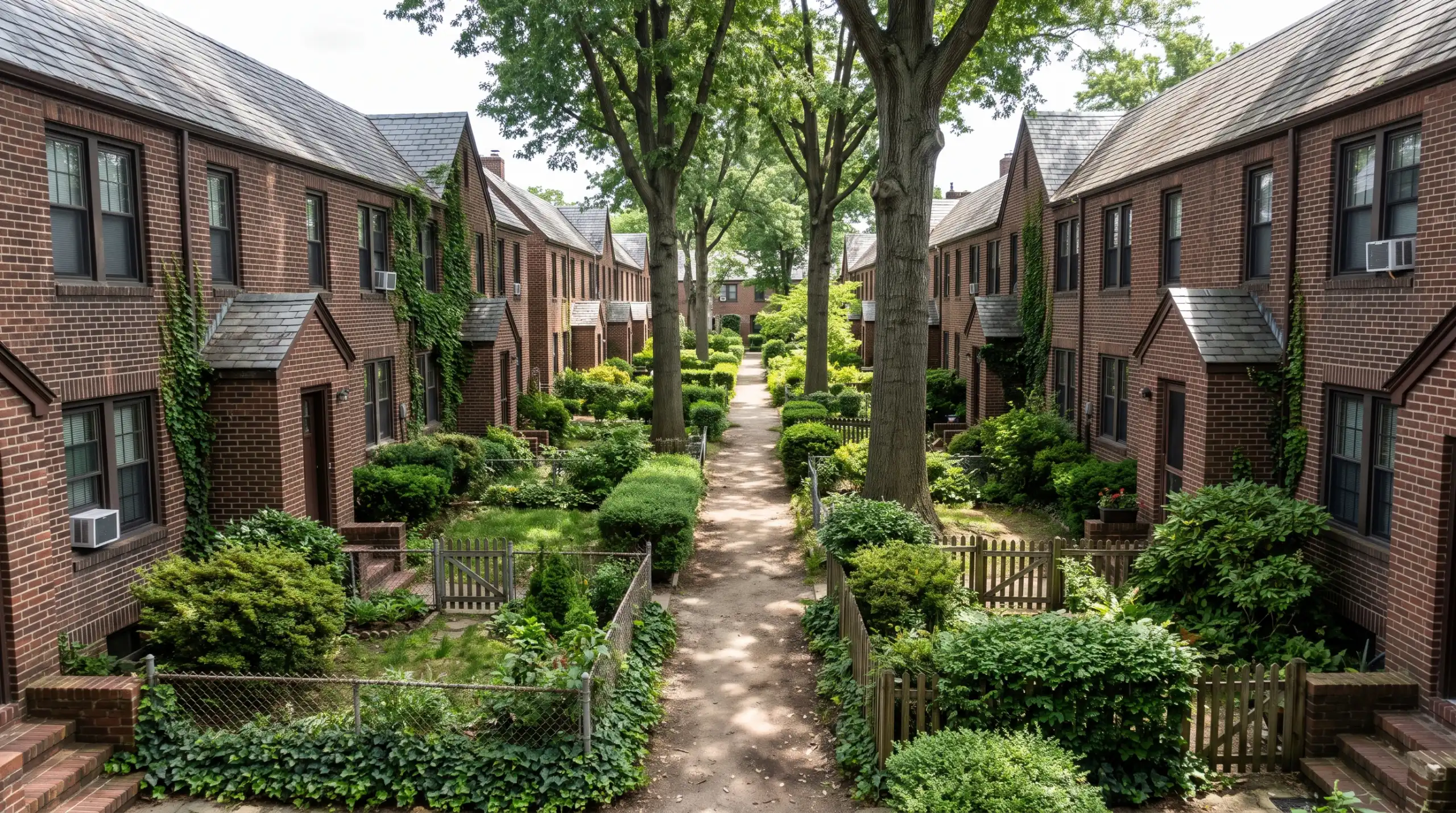
Sunnyside Gardens is more than a collection of charming brick homes and tree lined streets. It is one of New York City’s most significant examples of early 20th century urban planning, where architecture, green space, and community were deliberately brought together. Its historic character is precisely what makes the neighborhood so desirable today and what makes owning a property here a little different.
In 2007, Sunnyside Gardens received official NYC landmark designation, establishing protections that continue to shape how homeowners maintain, renovate, and improve their properties. For anyone considering purchasing a home in this distinctive Queens neighborhood, understanding those protections is just as important as understanding the property itself.
Why Was Sunnyside Gardens Designated a Historic District?
On June 26, 2007, the New York City Landmarks Preservation Commission (LPC) designated Sunnyside Gardens as an official historic district. The City Council affirmed the designation on October 29, 2007.
The district encompasses 16 city blocks in Sunnyside Queens. Although building counts vary across published records, the designation protects hundreds of properties and their shared architectural character.
But why was Sunnyside Gardens considered so important?
Developed between 1924 and 1928, Sunnyside Gardens was designed by Clarence Stein, Henry Wright, Frederick Ackerman, and Marjorie Cautley. Their vision drew inspiration from Ebenezer Howard’s British Garden City movement, which advocated for thoughtfully planned communities that balanced residential development with accessible green space.
The result was a groundbreaking approach to urban living.
| Original planning feature | What makes it significant |
|---|---|
| 28% lot coverage | Buildings occupy only a fraction of their lots, preserving substantial open space. |
| Nine residential courts | Homes are arranged around landscaped interior courtyards. |
| Low-rise architecture | Predominantly two and three story buildings create a consistent residential scale. |
| Shared green space | Interior gardens and pathways encourage interaction between neighbors. |
The original development prioritized light, air, affordability, and community. Rather than maximizing the number of buildings on each block, its planners deliberately preserved open space as an essential part of everyday living.
What Led to the 2007 Landmark Designation?
Preserving Sunnyside Gardens was not without controversy.
Originally, deed restrictions helped protect shared gardens and open spaces. However, many of these restrictions expired during the 1960s and 1970s. Over time, individual homeowners began making changes, including installing fences, creating parking areas, and modifying original architectural materials.
In 1974, the city introduced special preservation zoning to help protect the neighborhood. However, the existing protections did not fully prevent alterations.
By the early 2000s, preservation advocates were increasingly concerned that the original planning vision was being lost. The Sunnyside Gardens Preservation Partnership pushed for stronger protections, eventually leading to the LPC designation.
Not everyone supported the proposal. Some homeowners worried that landmark regulations would make renovations more expensive and restrict their ability to modify their own properties.
Ultimately, the architectural and historical significance of the neighborhood prevailed.
The designation established a more comprehensive framework for protecting its buildings, landscaping, and overall layout.
What this means for buyers: Landmark status is both an advantage and a responsibility. It helps preserve the surrounding streetscape and architectural character, but it also means certain improvements require additional planning, approvals, and potentially specialized contractors. Understanding those obligations before purchasing can prevent expensive surprises.
What Can You Renovate in Sunnyside Gardens?
One of the biggest misconceptions about historic districts is that homeowners cannot make changes to their properties, that isn’t true.
The LPC allows many types of improvements, provided they follow the district’s preservation standards. The key is understanding which projects require approval and which can proceed without it.
There are three primary approval pathways:
| Approval type | When it applies | Typical example |
|---|---|---|
| Certificate of No Effect (CNE) | DOB permitted work that does not affect significant architectural features | Certain plumbing and interior alterations |
| Permit for Minor Work (PMW) | Work affecting protected features that does not require a DOB permit | Window replacement, masonry repointing |
| Certificate of Appropriateness (CofA) | Major changes affecting significant historic features | Rear additions, rooftop additions, substantial architectural alterations |
A Certificate of Appropriateness generally requires review by the full LPC at a public hearing. Smaller projects may qualify for staff level approval.
Importantly, ordinary maintenance does not automatically require landmark approval. For example, replacing broken window glass, maintaining existing finishes, and certain matching repairs are permitted without a separate LPC application.
Before starting any project, confirm the requirements with the LPC. The Sunnyside Gardens Rules and Homeowner’s Manual provides detailed guidance, including examples of work that can qualify for staff level approval.
Important Renovation Rules Every Homeowner Should Know
Some of Sunnyside Gardens’ preservation requirements are particularly important when evaluating a property’s condition or planning future improvements.
| Feature | What homeowners need to know |
|---|---|
| Original brickwork | Painting or coating previously unpainted historic brick is not an acceptable preservation approach. |
| Mortar repairs | Repointing requires approval and an appropriate mortar composition |
| Masonry cleaning | Cleaning requires approval. Temperatures must remain at least 45°F for 72 consecutive hours from the start of work. |
| Windows | Replacement generally requires approval and must respect historic dimensions, materials, and appearance. |
| Roofs | Certain roof replacements require approval, rooftop additions require a Certificate of Appropriateness. |
| Rear yards | Projects affecting the historic common courts or visual access to them require public Commission review. |
| Fences | New fences require approval and must meet specific height, material, and placement requirements. |
One particularly important detail is the treatment of rear yards.
Unlike many other historic districts, Sunnyside Gardens places considerable importance on its interior gardens and shared courtyards. A rear addition, permanent structure, or substantial alteration can affect the original site plan, even when it is not visible from the street.
Similarly, new curb cuts and front yard alterations are not routine improvements. They can significantly affect the neighborhood’s original layout and require full consideration.
A detail buyers often overlook: Pay attention to existing renovations, not just the condition of the home. An attractive rear deck, replacement windows, or modified exterior could have been installed without the appropriate approvals. Ask for LPC permits, DOB records, and documentation of previous work. An existing improvement should never automatically be assumed to be compliant.
The Pros and Cons of Buying in a Historic District
Sunnyside Gardens offers a distinctive ownership experience, but it is important to consider both sides before purchasing.
| Advantages | Considerations |
|---|---|
| Protected architectural character | Exterior renovations can involve additional approvals. |
| Preserved green spaces and courtyards | Shared outdoor areas may have specific restrictions. |
| Consistent low-rise residential surroundings | Significant additions and expansions are more complicated. |
| Historically significant architecture | Specialized restoration materials and contractors may cost more. |
| A distinctive neighborhood identity | Buyers have less flexibility with certain exterior modifications. |
The biggest consideration is whether the property’s existing layout and condition meet your long term needs. If you anticipate expanding the home, installing a driveway, or substantially changing the backyard, investigate those possibilities before committing.
What to Investigate Before Purchasing
When purchasing in Sunnyside Gardens, looking beyond the asking price is essential. Historic properties can have maintenance considerations that are not immediately obvious during a showing.
Here are several areas worth investigating:
- Landmark compliance: Request documentation for previous exterior renovations and verify whether required LPC approvals were obtained.
- Roof and masonry condition: Have an experienced inspector evaluate the brickwork, mortar joints, roof, and potential water infiltration.
- Windows and insulation: Original windows can contribute to the home’s character, but buyers should understand potential restoration and energy efficiency costs.
- Outdoor space: Determine whether the backyard is privately controlled, subject to easements, or connected to shared courtyard arrangements.
- Future renovation plans: Consult an architect familiar with historic properties before assuming an addition or exterior modification will be approved.
- Property records: Review the NYC Department of Buildings and LPC records for open permits, violations, and previous applications.
Our recommendation: Build potential preservation costs into your purchasing budget. A property with well maintained original features and documented renovations may offer a much more predictable ownership experience than one requiring extensive restoration.
Buying or Selling in Sunnyside Gardens? Local Knowledge Matters.
At The Bianca Colasuonno Team, we believe understanding a neighborhood goes far beyond knowing its current listings. It means recognizing what makes a property valuable, understanding the details that can affect ownership, and helping clients make informed decisions before they commit.
Led by Bianca Colasuonno, a Compass founding agent in Queens, our team has more than $1 billion in closed sales volume and extensive experience throughout the borough. Our accomplishments include being ranked the #1 team in Astoria and #2 in Queens by volume in the 2026 Wall Street Journal and RealTrends rankings.
Thinking about buying or selling in Sunnyside Gardens? Connect with The Bianca Colasuonno Team to discuss your real estate goals and discover what makes this remarkable Queens neighborhood such a special place to call home.